Case study · AI data pipeline
Library makerspace map
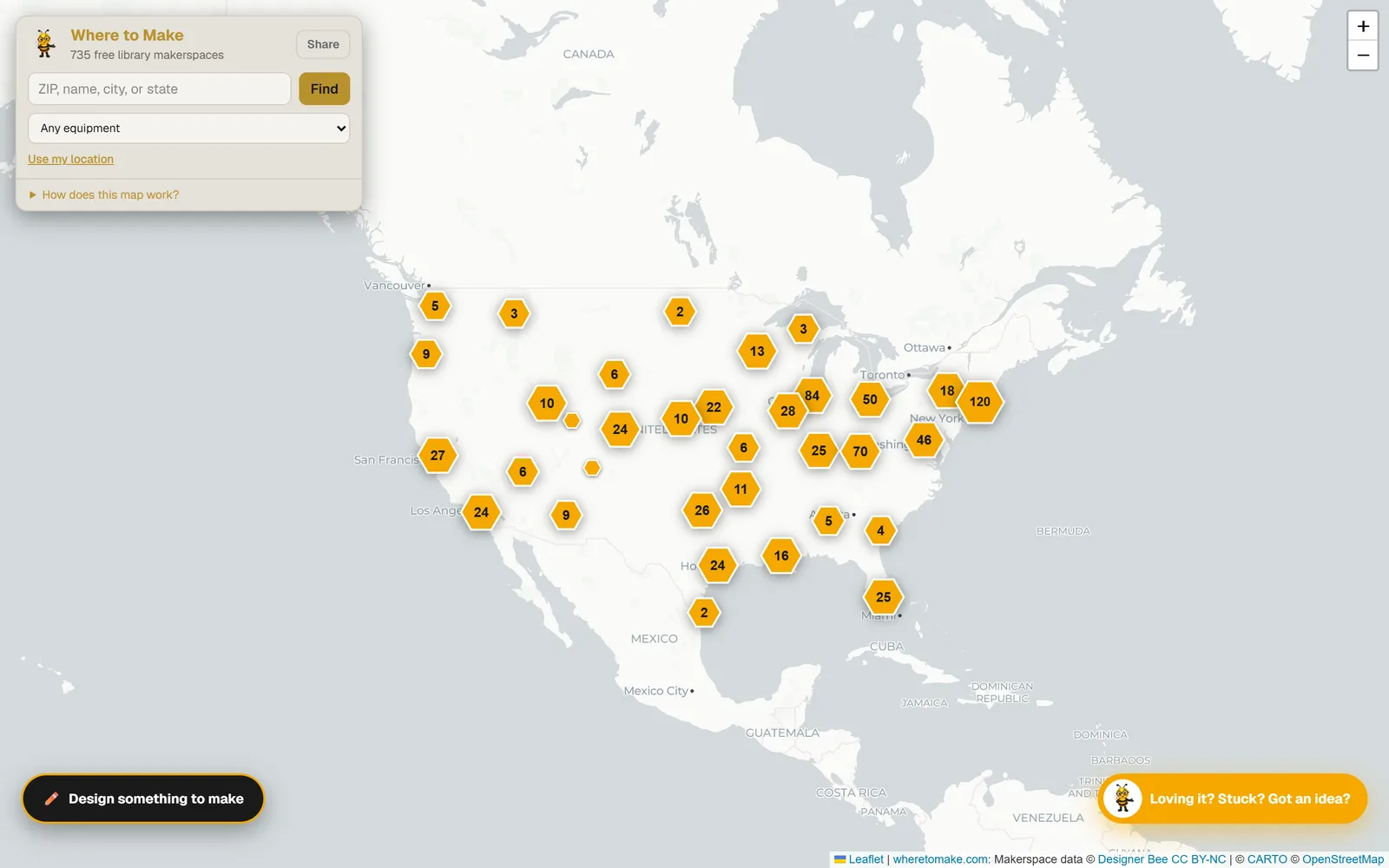
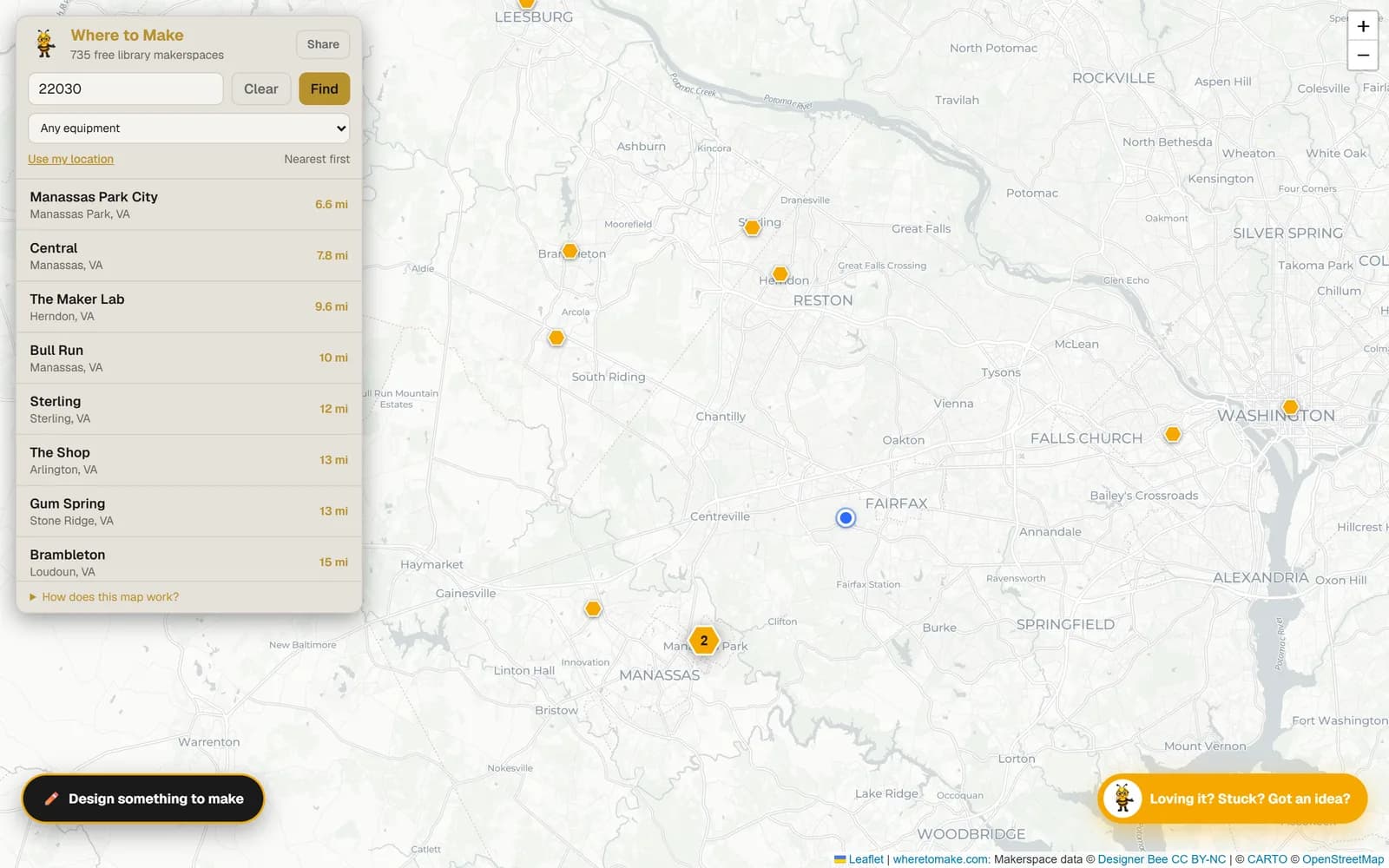
Many public libraries have 3D printers and laser cutters that anyone with a library card can use for free, but no one kept a full list. This pipeline built one for DesignerBee. It started from the federal survey of every US public library, about 17,000 records, and ended with a map of 735 library makerspaces in 47 states and jurisdictions, each with its equipment.
The map is public and free to use. Open the map (opens in a new tab)
How it was built
Free filters before any paid step
Bookmobiles, tiny branches, and seasonal libraries were dropped with plain rules, and the branches were grouped into about 7,600 library systems, before a single search or AI call was paid for.
Search first, then read
A web search flagged which systems mention a makerspace, at about 20 cents to $1.60 per state. Then Claude read each library’s makerspace pages and pulled out its equipment as structured data, passing unsure cases to a stronger model.
People can check every result
Every run also writes to a shared review sheet, with an audit trail for each page the AI read, so a person can see what it found and correct it.
Libraries confirm their own listing
Each listed library gets one short email asking it to check its entry. A second AI reviews every email against a fixed checklist before it goes out, and only a few go out each weekday.
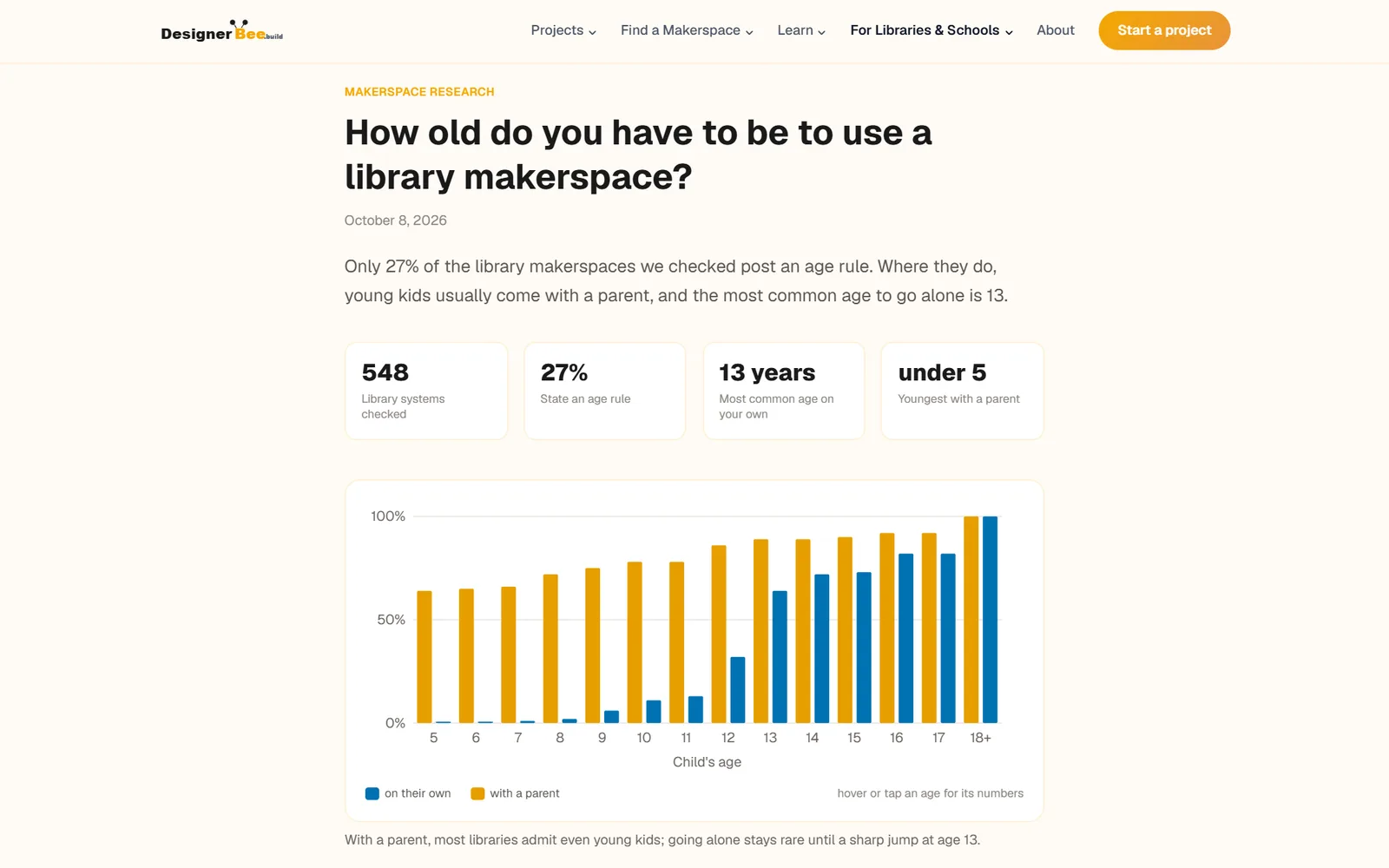
A research report every month
One AI answers a question across hundreds of libraries, and two reviewers on different models check each answer against an exact quote from the library’s own page. A person checks a sample by hand before it is published.
Open data
The map and its data are free for personal and educational use under a Creative Commons license.
More of the project
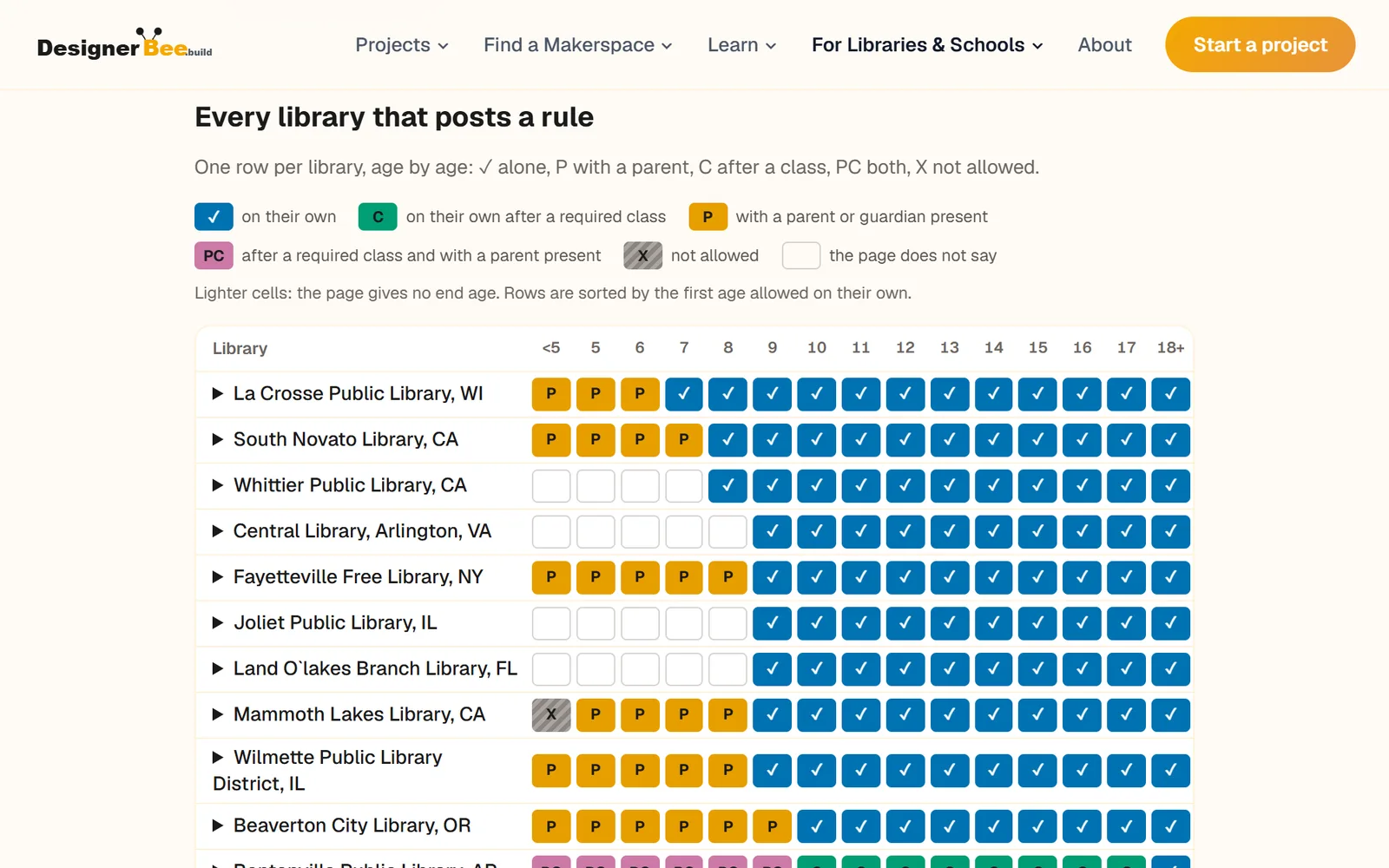
Every library’s age rule, age by age
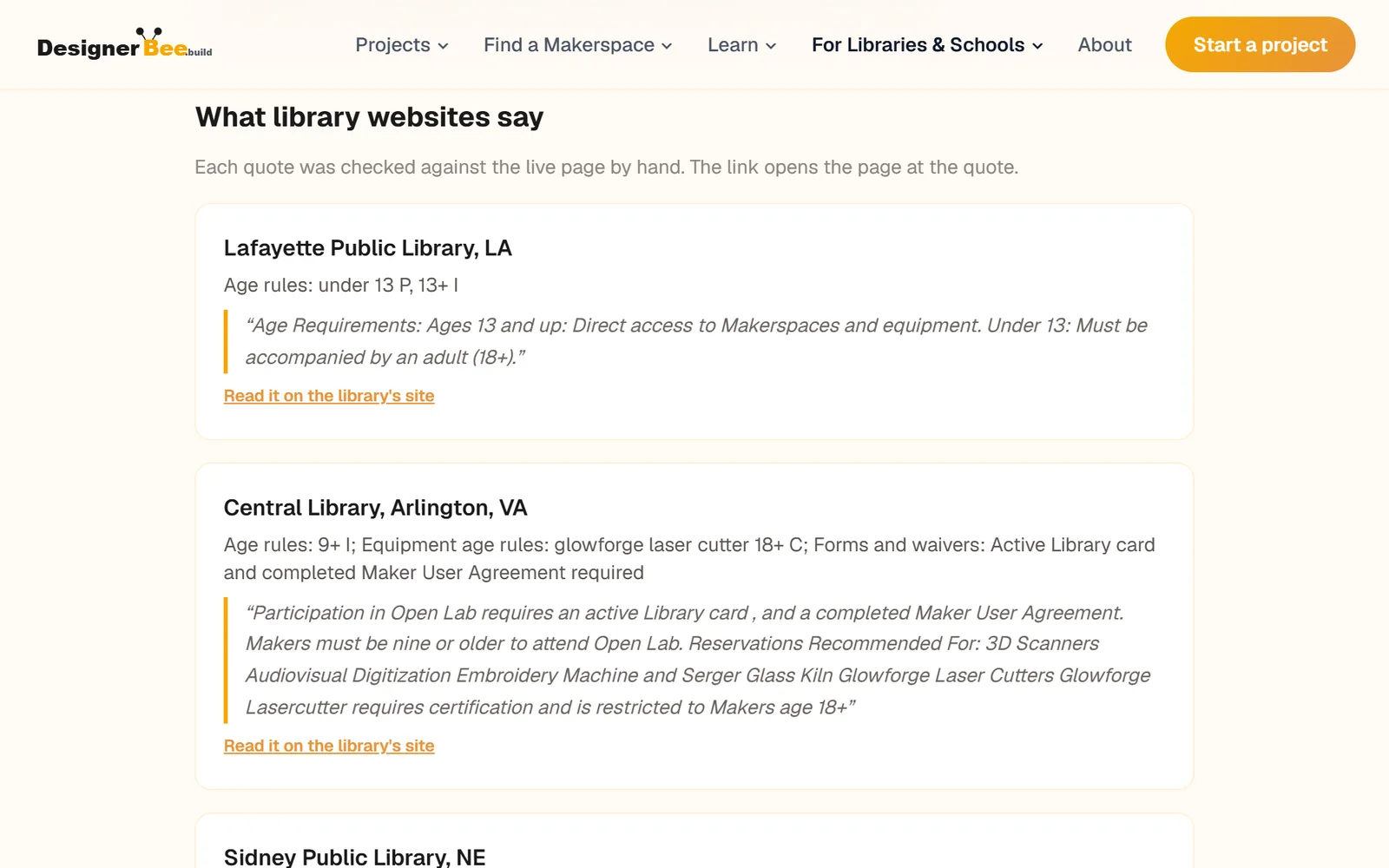
Each answer quotes the library’s own page
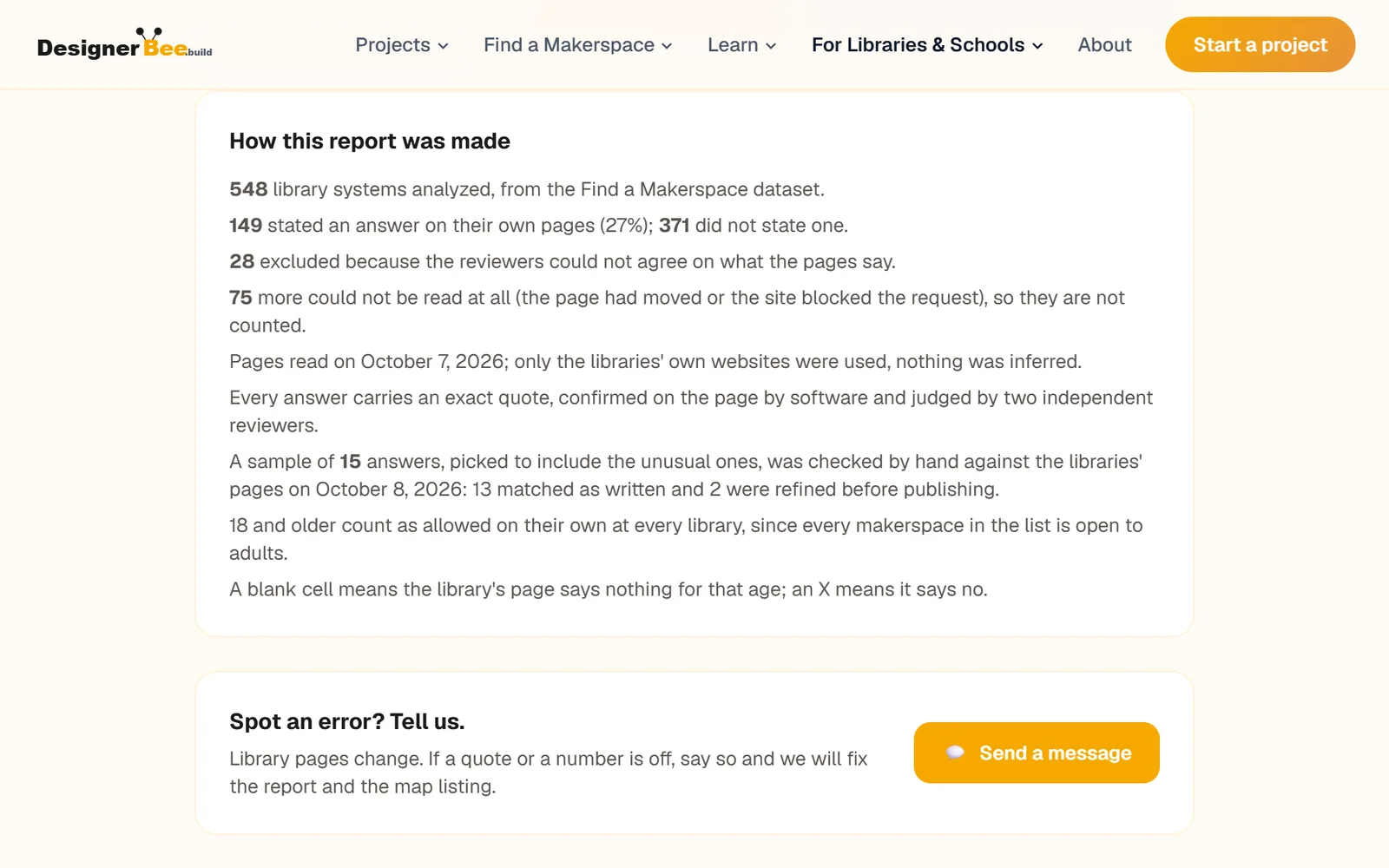
How the report was checked, in numbers
Built in Python on GitHub Actions, with Brave Search to find candidates, Claude to read pages and review answers, a Google Sheet for human review, Turso for the research runs, and Resend for the library emails.
Designed and developed by Montazeri AI Studio